
Top 5 Yoga Poses For Digital Nomads: Relief From Desk Work & Travel Stress
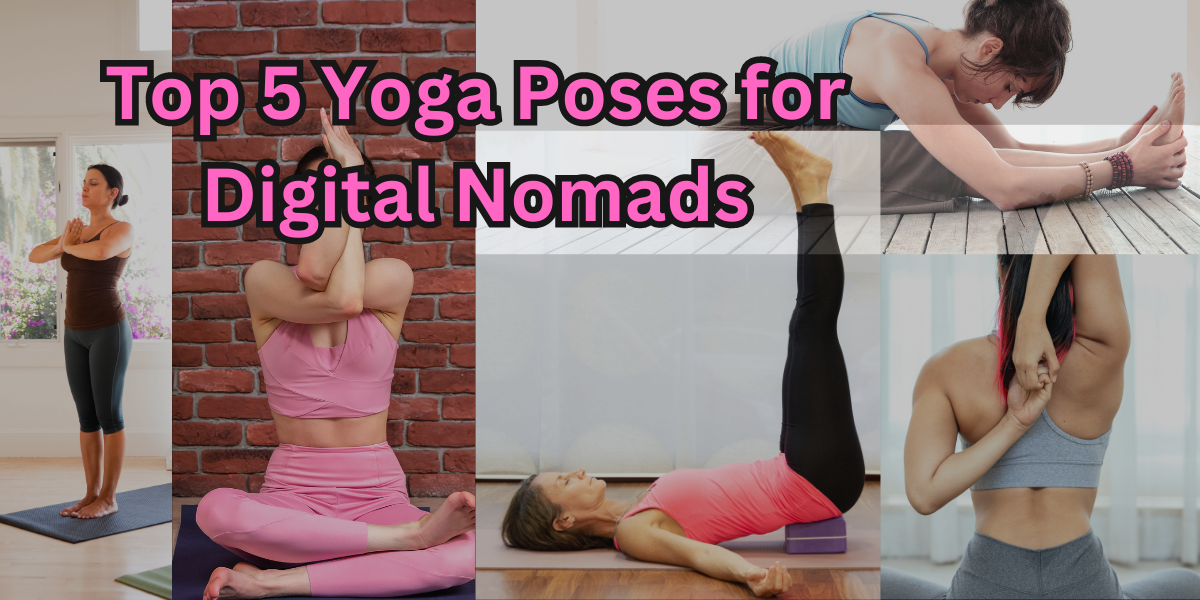
Are you a digital nomad spending endless hours hunched over your computer screen in cafes across Southeast Asia, co-working spaces in Lisbon, or your Airbnb in Bali? If you're battling lower back pain, neck stiffness, and the physical toll of constant travel combined with sedentary work, it's time to embrace the transformative power of yoga and regain balance in your nomadic lifestyle.
In this fast-paced, technology-driven world where remote work has become the norm, integrating simple yet effective yoga poses into your daily routine can work wonders for your physical and mental well-being. These five essential yoga poses require minimal space and zero equipment, perfect for the minimalist digital nomad lifestyle, whether you're working from a beach in Thailand or a mountain town in Colombia. Say goodbye to those stubborn backaches, stiff necks, and restless minds as we guide you through the top 5 yoga poses specifically chosen for digital nomads.
So, unroll your travel mat (or use a hotel towel), and let's embark on this journey to enhance your productivity, find inner peace, and rejuvenate your body, all while you continue your exciting remote work adventures. Namaste!
Understanding the Digital Nomad's Physical Challenges
The digital nomad lifestyle presents unique physical challenges that traditional office workers don't face. Constant travel, irregular sleeping arrangements, heavy backpacks, long flights, and working from non-ergonomic setups create a perfect storm for musculoskeletal issues. Digital nomads often experience:
Chronic lower back pain from prolonged sitting in cafes, airports, and temporary workspaces
Neck and shoulder tension from carrying laptops and looking down at screens
Hip tightness from extended periods of sitting during work and travel
Poor posture developed from adapting to various work environments
Mental stress from constant adaptation to new time zones and environments
This is where yoga becomes not just beneficial, but essential. Unlike gym memberships that tie you to one location, yoga travels with you, requiring only your body and a small amount of floor space. For those interested in understanding the deeper benefits of this practice, exploring What is Yoga can provide valuable insight into how these ancient practices address modern physical challenges.
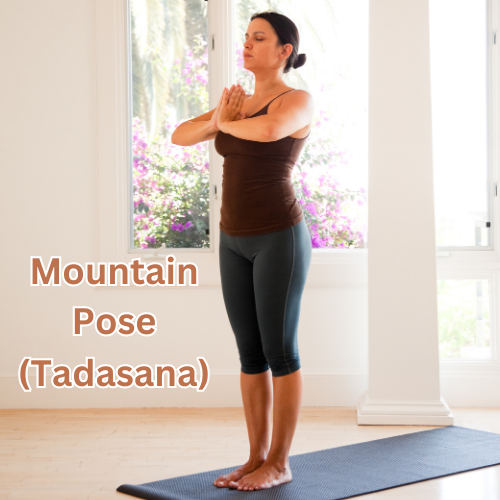
1. Mountain Pose (Tadasana): Your Foundation for Proper Posture
Tadasana, known as Mountain Pose, is the foundational yoga posture that embodies stability, strength, and mindfulness. While it appears deceptively simple, this pose is crucial for digital nomads who need to reset their posture after hours of hunching over keyboards. The Mountain Pose encourages proper alignment and awareness of the body's posture, promoting balance, improving concentration, and allowing for a smooth flow of breath.
This pose directly counteracts the forward-leaning, rounded-shoulder position that develops from laptop work. By practicing Tadasana regularly, you create a solid foundation for more advanced yoga postures and enhance overall body awareness in daily life helping you notice and correct poor posture before it becomes chronic pain.
How to Perform Mountain Pose (Tadasana)
Stand tall with your feet hip-width apart and arms relaxed by your sides
Distribute your weight evenly across both feet, feeling all four corners of each foot grounding into the floor
Engage your leg muscles by lifting your kneecaps slightly without locking your knees
Lengthen your spine by imagining a string pulling the crown of your head toward the ceiling
Roll your shoulders back and down, opening your chest
Let your arms hang naturally with palms facing forward
Breathe deeply and hold the pose for 1-2 minutes, focusing on grounding yourself and finding balance
Digital Nomad Tip: Practice Tadasana every hour during your workday. Set a timer to remind yourself to stand up, reset your posture, and take 5 deep breaths in Mountain Pose. This micro-practice prevents the accumulation of tension throughout your workday.

2. Seated Forward Fold(Paschimottanasana): The Ultimate Hamstring and Back Release
Paschimottanasana, or Seated Forward Fold, provides an intense stretch for the entire posterior chain of the body, including the spine, hamstrings, and calves. For digital nomads who sit for 6-10 hours daily, this pose is therapeutic gold. The hamstrings and lower back become chronically tight from prolonged sitting, creating a cascade of postural issues that can lead to sciatica, herniated discs, and chronic pain.
This yoga pose helps improve flexibility in the posterior muscles, stimulates the abdominal organs (improving digestion which is a common issue for traveling nomads with irregular eating schedules), and calms the mind. Paschimottanasana is often practiced at the beginning or end of a yoga session to prepare the body for other poses and to promote deep relaxation.
[IMAGE SUGGESTION: Person performing seated forward fold yoga pose on yoga mat with proper form demonstration] Alt text: "Seated forward fold yoga pose Paschimottanasana demonstrating proper technique for hamstring flexibility" Caption: "Seated Forward Fold releases tension accumulated from hours of sitting at your laptop"
How to Perform Seated Forward Fold (Paschimottanasana)
Sit on the floor with your legs extended straight in front of you, feet flexed
Sit up tall, lengthening your spine and engaging your core
Inhale and reach your arms overhead, creating length in your torso
Exhale and slowly hinge forward from your hips (not your waist), reaching toward your feet
If you can't reach your feet, use a yoga strap, belt, or towel around your feet, or simply rest your hands on your shins
For tight hamstrings, bend your knees slightly to protect your lower back
Hold the pose for 1-2 minutes while breathing deeply and consciously releasing tension in your upper body with each exhale
Important: It is essential to approach this pose with patience and respect for your body's limits to avoid injury. Never force yourself deeper into the stretch. Progress comes with consistent practice, not aggressive pushing.
Things to Know: Essential Facts About Yoga for Digital Nomads
Before continuing with the remaining poses, here are critical facts every digital nomad should understand about incorporating yoga into their remote work lifestyle:
Consistency matters more than duration: Even 10 minutes of daily yoga practice provides more benefits than a single 90-minute session once a week
You don't need special equipment: A hotel towel can substitute for a yoga mat, and a belt or scarf works as a yoga strap
Morning practice prevents pain: Practicing yoga before starting work prevents tension buildup rather than trying to fix it after hours of sitting
Yoga improves focus and productivity: Research shows that yoga practice increases concentration, reduces mental fatigue, and enhances decision-making abilities which is the critical skills for remote workers
Breathwork is equally important: The breathing techniques (pranayama) practiced in yoga reduce stress hormones and activate the parasympathetic nervous system
Modifications are not failures: Using props, bending knees, or practicing gentler variations allows you to gain benefits while honoring your current flexibility level
Jet lag recovery: Specific yoga poses help reset your circadian rhythm when crossing time zones frequently
Many digital nomads find tremendous value in working with Private Yoga & Personal Training Sessions to develop a customized practice that addresses their specific pain points and fits their travel schedule. Virtual sessions mean you can maintain consistency with the same instructor regardless of which country you're working from.

3. Cow-Face Pose (Gomukhasana): Opening Tight Shoulders and Hips
Gomukhasana, or Cow Face Pose, is a powerful multi-benefit posture that simultaneously addresses two of the digital nomad's biggest problem areas: tight hips from sitting and tight shoulders from hunching over laptops. This pose is particularly therapeutic for remote workers because it targets the exact muscle groups that become chronically shortened and tense from desk work and travel.
When practiced daily, Gomukhasana promotes overall body alignment, improves balance, and enhances flexibility and mobility in both the shoulders and hips. The pose relieves tension in the upper body, stimulates the chest muscles (counteracting the collapsed chest position from laptop work), and can be therapeutic for conditions like sciatica. It is common among digital nomads who sit for extended periods during both work and travel.
How to Perform Cow-Face Pose (Gomukhasana)
Sit on the floor with your legs extended in front of you
Bend both knees and stack your right knee directly on top of your left knee, bringing your feet toward opposite hips
If this hip position is too intense, sit on a folded blanket or cushion to elevate your hips
Bring your left arm overhead and bend it, reaching your left hand down between your shoulder blades
Reach your right arm behind your back from below and try to clasp your hands together
If your hands don't meet, use a strap, belt, or towel between your hands
Sit up tall, lifting your chest and drawing your top elbow back
Hold the pose for 1 minute, breathing deeply and evenly, then switch sides
Digital Nomad Adaptation: If you're working from a cramped airplane seat or hostel common room, you can practice just the arm portion of this pose while seated in a chair, providing immediate relief for shoulder tension.

4. Eagle Arms (Garudasana Arms): Releasing Upper Back and Shoulder Blade Tension
Garudasana Arms, known as Eagle Arms, specifically targets the upper back and the area between the shoulder blades. This is the exact region that becomes painfully tight from typing, scrolling, and mouse work. This pose is a lifesaver for digital nomads because it can be practiced anywhere: at your desk, on an airplane, in a hotel room, or even while standing in line at immigration.
Eagle Arms opens and stretches the shoulders, upper back, and arms while releasing chronic tension and stiffness. The pose improves flexibility and mobility in the arms and shoulders while stimulating energy flow in the upper body, promoting a sense of balance and centeredness. This stretch is particularly beneficial for those who spend long hours at a desk or experience tightness in the shoulders and neck, essentially every digital nomad.
How to Perform Eagle Arms (Garudasana Arms)
Sit or stand tall with a lengthened spine
Extend both arms forward at shoulder height, parallel to the floor
Cross your right arm over your left, bringing the elbows to stack on top of each other
Bend both elbows to create a 90-degree angle
Wrap your forearms around each other and try to bring your palms to touch
If your palms don't touch, place the back of your right hand against your left palm and this is perfectly acceptable
Lift your elbows slightly to shoulder height while drawing your shoulders down away from your ears
Hold the pose for 30 seconds to 1 minute while breathing deeply into the upper back
Unwind your arms and switch sides, crossing left over right
Pro Tip: Practice Eagle Arms during video calls (with your camera off) or while waiting for files to upload. This makes the stretch truly accessible for busy digital nomads.

5. Legs-Up-The-Wall Pose (Viparita Karani): Recovery and Restoration for Travelers
Viparita Karani, or Legs-Up-The-Wall Pose, is the ultimate recovery posture for digital nomads who combine long work hours with frequent travel. This gentle, restorative inversion promotes relaxation, reduces stress, and provides the benefits of mild inversion without straining the neck or shoulders. It's the perfect pose to practice after a long flight, a marathon work session, or when your body is exhausted from constant movement.
By encouraging blood flow from the lower extremities back to the heart, Viparita Karani helps reduce leg and foot swelling, a common issue for travelers on long flights or those who've been sitting all day. The pose calms the nervous system, activates the parasympathetic (rest-and-digest) response, and offers a powerful way to unwind and alleviate fatigue after a long day of work or travel.
How to Perform Legs-Up-The-Wall Pose (Viparita Karani)
Find a clear wall space and place your yoga mat perpendicular to the wall (or use a folded blanket for cushioning)
Sit sideways next to the wall with your hip touching it
In one smooth motion, lie down on your back while swinging your legs up against the wall
Scoot your buttocks as close to the wall as comfortably. They can touch the wall or be a few inches away
Extend your legs up against the wall, keeping them relatively straight but not locked
Let your arms relax by your sides with palms facing up, or place them on your belly
Close your eyes and focus on deep, diaphragmatic breathing
Stay in this pose for 5-10 minutes, allowing your body to fully relax and restore
Travel Tip: Practice this pose immediately after checking into a new accommodation to help your body recover from travel and adjust to a new time zone. It's particularly effective for reducing jet lag symptoms.
Find gratitude in your life with My Gratitude Meditation Series, you'll learn the following:
How to use gratitude to attract more good into your life
How to release negativity and cultivate positive thinking
How to use gratitude to increase your overall well-being
The science behind how gratitude can improve your life
How to meditate on gratitude even if you've never tried it before!
And much more!
WHAT'S MORE?
This self-guided program uses journaling to help you connect more deeply with the concepts taught in the meditation sessions.
For the next 30 days, you'll get a daily email with an audio file on gratitude! Each day will come with NEW instructions and tips to help enhance your experience.
So, if you're ready to start living a more abundant and joyful life, then click here to sign up for the Gratitude Meditation series:
Click Here To start the Gratitude Meditation Series, with a daily email sent to your Inbox.
Would you like to schedule a time to discuss your wellness goals for the time you are on the road? Book a time here and let’s give you clarity on how you can travel and feel great in your body the whole time without guilt!
See you in the program!
Warmest wishes,
Amy
Your Wellness Coach & Calmness Creator